






Game Description
Exit 8
1. Game Overview
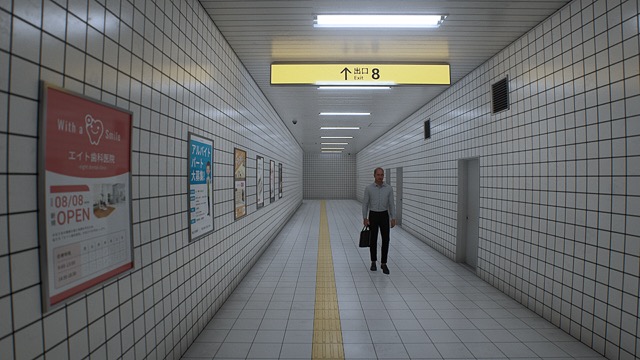
Exit 8 is a suspense-driven escape puzzle game built around a deceptively simple premise: you are trapped in an underground train station, and the only way out is through Door Number 8. That's it. One exit. One destination. The catch is everything standing between you and that door.
The station is not what it appears to be. What initially looks like a standard transit corridor quickly reveals itself to be a meticulously engineered gauntlet of moving platforms, laser barriers, timed mechanisms, and environmental traps that demand precise movement, sharp timing, and clear logical thinking. Every room you pass through is a puzzle with a physical component — you don't just reason your way through Exit 8, you execute. And execution, when the margin for error is narrow, is harder than it sounds.
What keeps Exit 8 compelling beyond its mechanical challenge is its atmosphere. The station has the eerie, liminal quality of a place that was designed for crowds but is now completely empty — the kind of unsettling quiet that makes every environmental sound feel significant. The combination of puzzle-solving pressure and tense atmosphere creates a unique tone: not pure horror, but not comfortable either. You are aware, on some level, that the station doesn't want you to leave.
The game's checkpoint system ensures that failure doesn't mean starting from scratch, keeping frustration low enough that each obstacle feels like a challenge to solve rather than a barrier to resent. Every decision you make — every door you open, every path you choose — edges you closer to Door 8 or further from it. The exit is real. Getting there is the question.
Key Details:
- Genre: Escape Puzzle / Action Adventure
- Difficulty Level: Medium–Hard
- Average Play Time: 15–30 minutes per session
- Best For: Puzzle enthusiasts, players who enjoy precision-movement challenges, fans of atmospheric escape games; ages 12+
2. How to Play
Getting Started:
- Observe before acting — Before moving through any new section of the station, stop and watch the environment. Moving platforms, laser timings, and on/off mechanisms all follow patterns. Identifying the pattern before committing to a move prevents unnecessary deaths.
- Interact with everything — Doors, panels, switches, and objects in the environment are all potentially interactive. When in doubt, click on it.
- Use the checkpoint system — The game saves your progress at checkpoints distributed through the station. If you fail, you'll respawn at the most recent checkpoint rather than the beginning. Use this knowledge to take calculated risks rather than playing excessively cautiously.
- Time your movements precisely — Most of Exit 8's obstacles operate on timing windows. A platform that's safe for two seconds becomes lethal for the next three. Count the cycles before moving.
- Track your progress toward Door 8 — The game's narrative advances based on your actions and choices throughout the station. Pay attention to environmental changes and story cues as you progress deeper.
Basic Controls:
| Action | Input |
|---|---|
| Move | WASD or Arrow Keys |
| Look Around | Drag Mouse |
| Interact / Click | Left Mouse Button |
Objective: Navigate through the train station's interconnected corridors, overcome environmental obstacles including moving platforms, laser barriers, and timed mechanisms, and reach Door Number 8 — the station's only exit. Your choices throughout the journey affect the story's progression and outcome.
3. Game Features & Highlights
- ✓ Environmental puzzle design — Every obstacle in the station is a solvable puzzle built from physical mechanics — moving platforms, timed lasers, on/off switches — rather than combat or resource management
- ✓ Atmospheric liminal setting — A deserted underground train station with the eerie, unsettling quality of a space designed for people that now contains none — building tension through environment rather than explicit horror
- ✓ Checkpoint system — Strategically placed respawn points prevent excessive backtracking after failure, maintaining gameplay momentum and keeping challenge levels fair
- ✓ Story-reactive gameplay — Decisions made throughout the station influence the narrative's progression, adding meaningful weight to environmental choices beyond pure obstacle navigation
- ✓ Precision movement mechanics — Tight timing windows and responsive controls reward players who observe carefully and execute deliberately, creating genuine satisfaction on each successful section clear
4. Tips & Strategies
Beginner Tips:
- Watch moving platforms and laser patterns through at least two full cycles before attempting to cross. The pattern won't change — patience here saves far more time than impulsive attempts that reset you to a checkpoint.
- When you reach a new section with multiple interactive elements, test each one individually before combining them. Understanding what each switch or panel does separately makes their combined effect predictable.
- Don't ignore the walls and floors. Environmental details — markings, symbols, signs — often carry clues about what's coming next or how to interact with upcoming obstacles.
Advanced Strategies:
- Memorize the timing intervals of recurring obstacles. Exit 8's mechanisms operate on fixed cycles — once you know the interval, you can predict safe windows several moves in advance rather than reacting in the moment.
- In sections with multiple simultaneous obstacles, identify the one with the longest dangerous phase and synchronize all your movements to its safe window. The shorter obstacles can usually be cleared within the window created by the longest one.
- Explore every reachable corner of each section before progressing. Some paths contain shortcuts or story elements that streamline later sections or unlock alternate progressions.
What to Watch Out For:
- Moving before confirming the pattern — The most common failure mode in Exit 8 is impatience. Every obstacle has a safe window. Moving before you've confirmed the pattern turns a solvable puzzle into a random dice roll.
- Missing interactive elements — Some puzzle solutions involve objects or panels that don't look immediately interactive. If you're stuck, systematically click every surface and object in the current section before concluding there's nothing to work with.
5. Game Elements Explained
The Environmental Obstacle System Exit 8's obstacle design is built around three core mechanical types that appear individually in early sections and in combination as the game progresses. Moving platforms require spatial awareness and timing — they follow fixed paths and cycles, meaning the challenge is reading the pattern and committing to a movement window. Laser barriers add a consequence layer to movement — passing through the wrong space at the wrong moment resets your progress to the last checkpoint. Timed on/off mechanisms introduce a sequencing element: certain paths are only viable when specific environmental conditions align, requiring you to think two or three steps ahead rather than just reacting to what's immediately in front of you. The genius of Exit 8's design is how these systems combine — a section might feature moving platforms that carry you through laser fields while a timed switch temporarily clears the path. Understanding each system individually is a prerequisite for navigating their combinations effectively.
The Checkpoint System Exit 8's checkpoint system is a deliberate design choice that transforms how the game feels to play. In a game without checkpoints, each failure carries the full psychological weight of lost progress — often making players overly conservative and reducing the experience to frustration. Exit 8 solves this by distributing checkpoints at meaningful intervals throughout the station, typically at the transition points between distinct obstacle sections. The result is that failure costs you the current section but not your overall progress. This reframes each obstacle as a contained challenge to master rather than a high-stakes gamble that threatens everything you've earned. The checkpoint system also encourages experimentation — because the penalty for a wrong approach is low, players can try multiple strategies on difficult sections without the emotional cost of starting over. It keeps the difficulty fair without reducing the satisfaction of clearing a hard section.
The Station Narrative Exit 8 is not a purely mechanical game — the train station tells a story, and your progress through it reveals that story in layers. Environmental details, signs, objects left behind, and changes in the station's appearance as you go deeper all contribute to a narrative about the space itself: what it was, what happened to it, and why Door 8 is the only way out. This narrative layer rewards attentive players who read environmental details rather than rushing through each section the moment the path is clear. Choices you make at key decision points throughout the station — which path to take, which doors to open — affect how the narrative unfolds. The story is embedded in the world rather than delivered through cutscenes, which means players who engage with the environment fully get a significantly richer experience than those who treat it as pure obstacle navigation.
6. Frequently Asked Questions
Q: How do I get past a section with moving platforms and lasers simultaneously? A: Observe both systems for at least two full cycles without moving. Identify the moment when the platform is in a safe position AND the laser is in its off or clear phase simultaneously — this is your crossing window. If no such window seems to exist, look for interactive elements (switches, panels) in the current section that might modify one of the obstacle patterns.
Q: What should I do if I'm completely stuck on a puzzle section? A: Systematically interact with every object and surface in the current section — panels, switches, doors, and floor objects that you may have overlooked. If you've tried everything interactable, return to the previous checkpoint area and check whether there's an element you passed without engaging. Exit 8 rarely places unsolvable obstacles; a solution is always present in the current section or immediately adjacent to it.
Q: Is Exit 8 available on mobile devices? A: Exit 8 is optimized for desktop browser play. The combination of mouse-look and keyboard movement provides the most precise control for the game's timing-based obstacles. Desktop play on Chrome, Firefox, Safari, or Edge is recommended. Mobile play may be limited by touchscreen control precision.
Q: Does the game save my progress? A: Exit 8 saves your position at each checkpoint during an active browser session. Closing the browser tab may cause you to lose progress beyond your last checkpoint. For best results, complete full obstacle sections and reach the next checkpoint before exiting the game.
Q: How many endings does Exit 8 have, and do my choices really matter? A: Exit 8 features story-reactive progression where the choices you make at key decision points throughout the station influence the narrative's direction and outcome. Reaching Door 8 is the constant objective, but the story surrounding your journey — and what you find when you arrive — varies based on your path through the station. Replaying with different choices at key moments reveals alternate narrative outcomes.
7. Related Games You Might Enjoy
If you like Exit 8, you might also enjoy:
- the Backrooms - It has the same looping, liminal-space tension and focus on spatial awareness.
- I'm on Observation Duty - It also depends on spotting small anomalies before they become dangerous.
- Five Nights at Freddy's 4 - It creates fear through close attention, audio cues, and repeated pattern learning.
Comments (0)
Add a Comment