
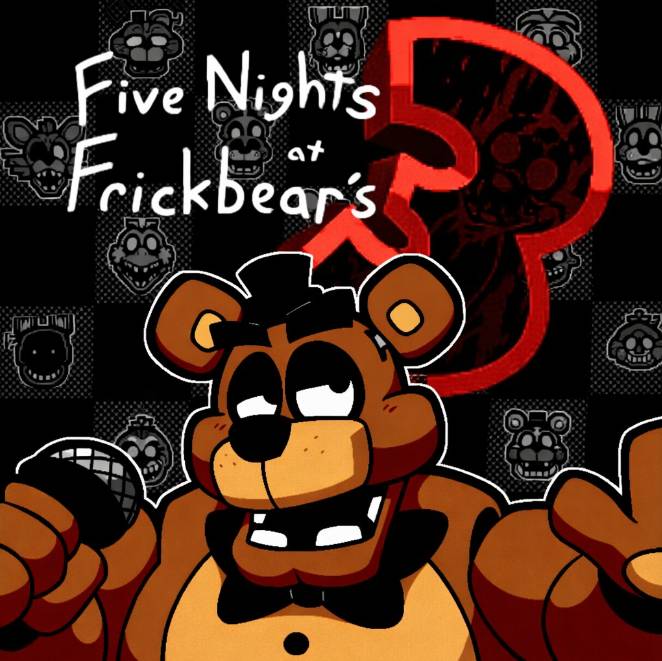







1. Five Nights at Frickbear's 3 Game Overview
Five Nights at Frickbear's 3 is a survival horror / observation defense game set in a closed entertainment venue. Its central appeal comes from placing the player under pressure while still giving enough information to make deliberate decisions. Rather than treating every scare as a random event, the game asks you to study the behavior of a relentless Granny-like hunter and turn that knowledge into a practical plan. Its signature scenario centers on enduring a 2.5D security shift until 6 AM while a familiar fangame routine grows steadily less predictable. The basic loop is to observe the available information, identify where danger is developing, and use defensive actions before the situation becomes impossible to control. That loop is supported by surveillance, defensive timing, and escalating night pressure, so progress depends on attention as much as quick reactions. A successful run usually begins with a calm observation routine. Checking the interface and identifying each defensive control prevents the early mistakes that waste power or expose an unmonitored route. As the night develops, the same routine becomes harder because threats move faster and information remains incomplete. Familiar controls therefore create steadily increasing tension. What makes the experience worth trying is the balance between preparation and reaction. Every correctly timed decision buys another safe moment, while panic quickly compounds small errors. The experience is particularly well suited to FNAF-style horror fans who enjoy surveillance, timing, and resource pressure. Those players should find a clear reason to return, test a cleaner strategy, and see how efficiently they can reach the objective.
Key Details:
- Genre: Survival Horror / Observation Defense
- Difficulty Level: Variable, rising from Medium to Hard
- Average Play Time: 15–30 minutes per run
- Best For: FNAF-style horror fans who enjoy surveillance, timing, and resource pressure
2. How to Play Five Nights at Frickbear's 3
Getting Started:
- Use the opening moments to identify every camera, doorway, or defensive control.
- Check information in a repeatable order instead of switching screens randomly.
- Confirm a threat’s position before spending power, ammunition, or another limited resource.
- Return to the central view regularly so one area does not remain unobserved.
- Survive the current night or wave, then adjust your routine for the next difficulty increase.
Basic Controls:
- WASD: Move through the environment.
- Mouse / Left Click: Look, select, inspect, aim, or interact as prompted.
- E / Interaction Prompt: Use nearby objects when an interaction key appears.
- Shift: Run or modify movement when the game displays that option.
- Touch Controls: Tap the corresponding on-screen buttons on supported mobile browsers.
Objective: Survive the required nights or waves by tracking threats, using defenses at the right moment, and preserving enough resources to reach the final phase.
3. Five Nights at Frickbear's 3 Features & Highlights
- ✓ A repeatable observation loop rewards disciplined attention
- ✓ Defensive tools are most effective when used with precise timing
- ✓ Escalating stages turn learned patterns into harder tests
- ✓ Limited information keeps every routine tense
- ✓ Short runs make strategic experimentation practical
4. Five Nights at Frickbear's 3 Tips & Strategies
Beginner Tips:
- Use the first attempt to learn the interface and nearby layout instead of rushing for a perfect result.
- Avoid repeating an interaction without understanding what changed; this wastes time and can create unnecessary danger.
- Choose one small objective, complete it cleanly, and then expand the route.
Advanced Strategies:
- Use a fixed camera or information-check cycle and shorten it only when a confirmed threat is close.
- Delay defensive actions until the last safe moment so resources cover more of the stage.
- Track which warning belongs to each attacker instead of treating every signal the same.
What to Watch Out For:
- Tunnel vision: focusing on one clue or enemy can hide a new threat; pause and rescan the surroundings.
- Resource panic: using every defensive option immediately leaves nothing for the next phase; spend only what solves the current problem.
5. Five Nights at Frickbear's 3 Game Elements Explained
Observation and Defensive Timing: The defense loop in Five Nights at Frickbear's 3 is built around incomplete information. Cameras, doorways, warning sounds, or status indicators show pieces of the threat’s movement, but checking one area means looking away from another. Build a short observation route and repeat it at a steady pace. React only after confirming what you saw; unnecessary defensive actions can consume power, ammunition, time, or attention. When a threat disappears from one location, use the game’s movement rules to predict the next likely position rather than searching randomly. Defensive tools work best as brief interventions, not permanent safety. Close, block, flash, shoot, or hide only long enough to break the current attack, then return to gathering information. This system matters because later stages usually increase speed without changing the underlying logic. A reliable routine reduces panic, preserves resources, and leaves enough mental space to catch the unusual event that signals real danger. Practice the sequence during an early attempt so it remains usable when the pace increases.
Resource Management and Progress: Five Nights at Frickbear's 3 becomes easier to understand when progress is measured in information as well as distance. Reaching a new room, surviving another phase, or revealing a story detail is useful, but learning how the game responds to an action can be equally valuable. Before taking a risk, identify what you expect to gain and how you will leave if the attempt fails. This prevents aimless exploration and protects limited time, health, power, ammunition, or safe hiding opportunities. Keep completed objectives separate from unresolved ones. Once a key route, clue, or behavior is confirmed, build the next attempt around that knowledge instead of checking everything again. Failure should answer a specific question: whether a route is safe, whether an item has another use, or how quickly the threat reacts. When several goals are available, finish the one that opens the most options while requiring the fewest exposed actions. This system matters because consistent progress reduces uncertainty. A calm player with a partial plan will usually perform better than a fast player reacting to every scare.
6. Five Nights at Frickbear's 3 Frequently Asked Questions
Q: How do I survive the opening night? A: Learn the location of every information and defense control, follow a steady checking cycle, and react only to confirmed movement. Save limited resources for the final part of the night.
Q: What should I do if I keep failing in the same place? A: Use the next attempt as a diagnostic run. Identify the exact action that triggered danger, change only that part of the route, and preserve a safe fallback position.
Q: Is this game compatible with phones, tablets, and desktop browsers? A: The game is delivered through a browser, but control support depends on the embedded build. Desktop play with a keyboard and mouse is the safest option; mobile players should confirm that touch controls appear before starting a long session.
Q: Can I save my progress? A: Save behavior depends on the individual browser build. Some games store progress locally, while short-session games restart when the page reloads. Avoid clearing site data and finish the current stage before closing the tab whenever possible.
Q: How do I unlock later content or additional outcomes? A: Complete the current objective, survive the required stage, or finish a different decision route. If no unlock menu is shown, progression is likely automatic or tied to actions inside the current run.
7. Games Like Five Nights at Frickbear's 3 You Might Enjoy
If you like Five Nights at Frickbear's 3, you might also enjoy:
- Five Nights With Voxels - It uses a similar survival loop built around observation, timing, and escalating pressure.
- FNAF Free UCN - It uses a similar survival loop built around observation, timing, and escalating pressure.
- Granny in Five Nights: Redemption - It uses a similar survival loop built around observation, timing, and escalating pressure.