




Live Granny4.io

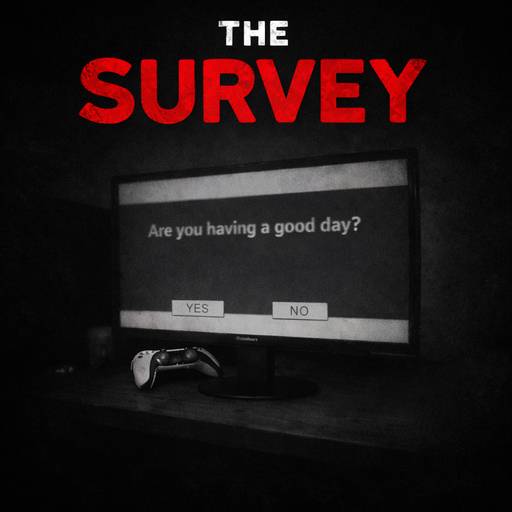
The Survey

Browser Instant Play Free
advertisement
Granny Games
64 games See all
Game Description

1. The Survey Game Overview

The Survey is a psychological horror / anomaly detection game set in a seemingly ordinary digital space. Its central appeal comes from placing the player under pressure while still giving enough information to make deliberate decisions. Rather than treating every scare as a random event, the game asks you to study the behavior of ambiguous visitors and unexplained anomalies and turn that knowledge into a practical plan. Its signature scenario centers on answering increasingly personal questions while darkness, sound, and hallucinations distort a short browser session. The basic loop is to study the environment, compare new details with what you remember, and report or respond only when the evidence supports your decision. That loop is supported by environmental comparison, anomaly reporting, and memory-based decisions, so progress depends on attention as much as quick reactions. A successful shift begins with a careful baseline scan. Learning what belongs in the scene prevents harmless details from being mistaken for genuine danger. As the investigation develops, changes become less obvious and decisions carry greater consequences. The tension comes from having to trust a repeatable method under time pressure. What makes the experience worth trying is the transformation of memory into a survival tool. Small details matter, and a calm comparison can be more powerful than a fast reaction. The experience is particularly well suited to careful players who like spotting small changes and testing their memory. Those players should find a clear reason to return, test a cleaner strategy, and see how efficiently they can reach the objective.

Key Details:

  • Genre: Psychological Horror / Anomaly Detection
  • Difficulty Level: Variable
  • Average Play Time: 10–25 minutes per investigation
  • Best For: Careful players who like spotting small changes and testing their memory

2. How to Play The Survey

Getting Started:

  1. Study the starting room, person, or document before taking action.
  2. Create a mental checklist of normal details and revisit them in the same order.
  3. Investigate one suspicious change at a time.
  4. Submit a report or decision only after identifying the relevant evidence.
  5. Use mistakes to refine the checklist for the next attempt.

Basic Controls:

  • Mouse / Left Click: Look, select, inspect, aim, or interact as prompted.
  • Touch Controls: Tap the corresponding on-screen buttons on supported mobile browsers.
  • In-game Prompts: Follow the opening control guide because browser versions can map actions differently.

Objective: Identify genuine anomalies, impostors, or suspicious events accurately enough to complete the shift or investigation.


3. The Survey Features & Highlights

  • ✓ Detailed environments reward patient visual comparison
  • ✓ Clear reporting decisions turn memory into a practical skill
  • ✓ Subtle changes create tension without constant pursuit
  • ✓ Repeatable scanning routes support steady improvement
  • ✓ Incorrect assumptions carry meaningful risk

4. The Survey Tips & Strategies

Beginner Tips:

  • Use the opening period to memorize the normal scene before searching for changes.
  • Avoid reporting on a vague feeling; identify the exact object, person, or detail that differs.
  • Build a short scanning checklist and repeat it in the same order.

Advanced Strategies:

  • Divide the scene into zones and scan them in the same order on every pass.
  • Report the exact anomaly category only after confirming both location and type.
  • Use uncommon details as memory anchors for nearby objects.

What to Watch Out For:

  • Tunnel vision: staring at one suspicious detail leaves other zones unchecked; return to the full scanning route.
  • False positives: reporting before confirming the location and type can waste limited opportunities; compare twice when time allows.

5. The Survey Game Elements Explained

Baseline Memory and Anomaly Reporting: The Survey rewards players who establish a clear picture of normal conditions before searching for danger. During the opening moments, scan the scene in a fixed order: large objects, doors and windows, lighting, signs or text, then smaller details. The same method applies when inspecting people or documents. Compare identity, appearance, behavior, and required information one category at a time. When something changes, identify the exact difference before reporting it. Guessing creates false positives and makes later observations less reliable. If several rooms or subjects are available, rotate through them predictably so none remains unchecked for too long. The system becomes challenging because memory is limited and fear encourages rushed decisions. External notes can help during learning, but the long-term goal is to build a compact mental checklist. Good observation turns a confusing horror scenario into a sequence of testable questions, allowing you to catch genuine anomalies while ignoring harmless distractions. Practice the sequence during an early attempt so it remains usable when the pace increases.

Risk, Information, and Progress: The Survey becomes easier to understand when progress is measured in information as well as distance. Reaching a new room, surviving another phase, or revealing a story detail is useful, but learning how the game responds to an action can be equally valuable. Before taking a risk, identify what you expect to gain and how you will leave if the attempt fails. This prevents aimless exploration and protects limited time, health, power, ammunition, or safe hiding opportunities. Keep completed objectives separate from unresolved ones. Once a key route, clue, or behavior is confirmed, build the next attempt around that knowledge instead of checking everything again. Failure should answer a specific question: whether a route is safe, whether an item has another use, or how quickly the threat reacts. When several goals are available, finish the one that opens the most options while requiring the fewest exposed actions. This system matters because consistent progress reduces uncertainty. A calm player with a partial plan will usually perform better than a fast player reacting to every scare.


6. The Survey Frequently Asked Questions

Q: How do I spot anomalies more reliably? A: Memorize the normal scene in a fixed order, compare one zone at a time, and confirm both the location and anomaly type before submitting a report.

Q: What should I do if I keep failing in the same place? A: Use the next attempt as a diagnostic run. Identify the exact action that triggered danger, change only that part of the route, and preserve a safe fallback position.

Q: Is this game compatible with phones, tablets, and desktop browsers? A: The game is delivered through a browser, but control support depends on the embedded build. Desktop play with a keyboard and mouse is the safest option; mobile players should confirm that touch controls appear before starting a long session.

Q: Can I save my progress? A: Save behavior depends on the individual browser build. Some games store progress locally, while short-session games restart when the page reloads. Avoid clearing site data and finish the current stage before closing the tab whenever possible.

Q: How do I unlock later content or additional outcomes? A: Complete the current objective, survive the required stage, or finish a different decision route. If no unlock menu is shown, progression is likely automatic or tied to actions inside the current run.


7. Games Like The Survey You Might Enjoy

If you like The Survey, you might also enjoy: