





Game Description
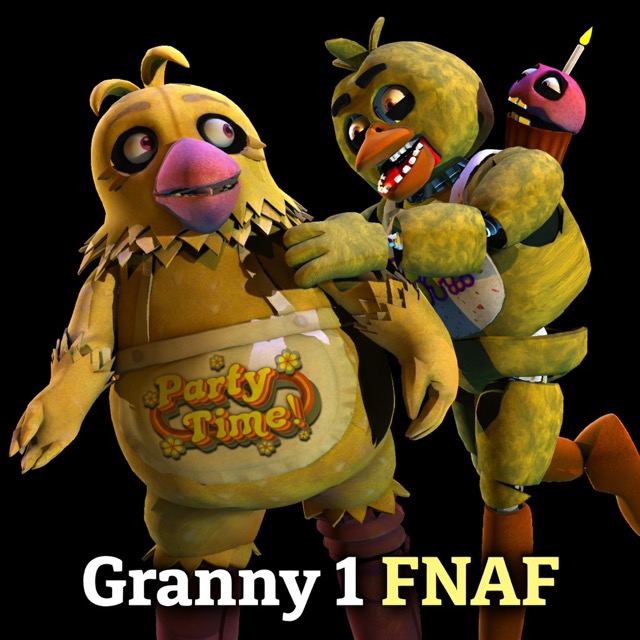
Granny 1 — FNAF
1. Game Overview
Granny 1 — FNAF is the site's purest fusion of two horror game genres: the Granny escape formula and the Five Nights at Freddy's surveillance-and-power management system. You are locked in Granny's house. At night, she hunts through the corridors, listening to every sound. Your tools are the security camera system, sturdy oak doors, controllable lights, and a limited energy supply that must last until 7:00 AM. Burn through it too fast and the systems fail — and Granny reaches your room.
The game's mechanical combination is more coherent than it might initially appear. FNAF's resource management (power conservation as the primary strategic constraint) maps naturally onto the Granny formula's silence requirement (noise management as the primary stealth constraint). Both are about withholding — power in the FNAF layer, sound in the Granny layer — and the combination creates a game where two forms of restraint operate simultaneously. You don't close the door unless you need to; you don't turn on the light unless you need to; you don't make noise unless it's deliberate. Each action has a cost.
The objective is straightforward: survive from the start of the night until 7:00 AM by distributing your energy resources intelligently across the camera system, the door controls, and the lights. Switch cameras to track Granny's position. Close the appropriate door when she's in the adjacent corridor. Turn on lights only to confirm immediate threats. React to every sound — and when you react correctly, every hour that passes brings you closer to morning.
Key Details:
- Genre: Survival Horror / FNAF-Style Surveillance
- Difficulty Level: Medium — resource management under increasing Granny aggression
- Average Play Time: 15–30 minutes per session
- Best For: Fans of both the Granny series and FNAF aged 12+; players who enjoy resource management survival games; anyone interested in the surveillance-and-door mechanic applied to the Granny setting
2. How to Play
Getting Started:
- Locate Granny on the camera system immediately — Find her starting position on your first camera sweep before she begins moving. Knowing where she is at the start of the night gives you the baseline for every subsequent tracking decision.
- Develop a camera sweep routine — Cycle through camera feeds in a consistent rotation to maintain current awareness of Granny's position. Don't fixate on one feed — a camera you haven't checked recently is a blind spot.
- Close the oak doors only when Granny is in the adjacent corridor — Doors block Granny's approach but drain energy while closed. Close when her camera position confirms she's in the immediately adjacent corridor, open again once the camera confirms she's moved on.
- Use lights conservatively — Lights are a secondary confirmation tool for when cameras don't give sufficient visibility of the doorway area. Use them briefly to check for immediate threats rather than holding them on continuously.
- Distribute energy across the full night — Energy is finite and must last until 7:00 AM. Doors and lights both draw from the same pool. Running the energy to zero before morning disables your defenses when Granny's aggression is typically highest.
Basic Controls:
| Action | Input |
|---|---|
| All actions (camera navigation, door control, light activation) | Mouse / Left Click |
Objective: Survive in Granny's house from nightfall until 7:00 AM by tracking her movement through the camera system, closing the sturdy oak doors when she approaches the adjacent corridor, and activating lights only when necessary — all while conserving a limited energy supply that powers every defensive system. Run out of energy before morning and the defenses fail.
3. Game Features & Highlights
- ✓ FNAF-style camera and door system applied to Granny — The security camera network, sturdy oak door controls, and proximity lights directly apply the Five Nights at Freddy's surveillance mechanic to the Granny horror setting
- ✓ Limited energy supply with shared drain — A single energy pool powers cameras, doors, and lights simultaneously — requiring genuine resource distribution decisions across the full night
- ✓ Sound-reactive Granny in a surveillance context — Granny reacts to sounds in the house while you track her through cameras — combining the Granny formula's noise management with the FNAF formula's visual surveillance
- ✓ 7:00 AM survival target — A fixed morning target creates a time-pressure survival arc: each hour passed is progress, each energy misstep is a risk to the full night's remaining hours
- ✓ Oak door protection mechanic — The game specifically names the oak doors as your primary physical defense — they block Granny when she reaches the adjacent corridor, but their energy cost requires careful timing of when to close and open
4. Tips & Strategies
Beginner Tips:
- Open doors the moment the camera confirms Granny has moved away from the adjacent corridor. A closed door that's no longer needed is draining energy that you'll need in the final hours of the night when Granny's aggression peaks. The close-when-needed, open-when-confirmed pattern is the most energy-efficient door management approach.
- React to every sound — the game specifically instructs this. Sounds from specific directions indicate Granny's movement even when you're not actively checking that area's camera. Use sounds to prioritize which camera to check next rather than cycling through feeds in a fixed pattern regardless of audio cues.
- Lights are a last-resort confirmation tool, not a monitoring system. If the camera is giving you clear information about Granny's position, the lights don't need to be on. Use them specifically when camera coverage is insufficient for the doorway area and you need immediate confirmation of whether the doorway is clear.
Advanced Strategies:
- Budget your energy across the night's hours. A rough proportional guide: if you're consuming more than 15% of your total energy per hour of in-game time in the early hours, your door and light usage is too frequent for the energy supply to reach 7:00 AM at the current rate. Adjust your door timing (open faster, close only on confirmed approach) and light usage (brief checks rather than sustained illumination) to bring consumption within a sustainable rate.
- Learn Granny's behavioral tendencies from audio cues rather than depending exclusively on camera confirmation. Sounds carry directional information that predicts which camera to check before the camera check itself confirms her position. Developing audio-first awareness reduces the number of camera checks needed per hour, which reduces the energy drain from camera system use.
- In the final hours of the night (5:00 AM onward), Granny typically becomes more aggressive. Reserve more of your energy budget for the final hours by being more conservative in the middle hours — a door that could have been closed as a precaution in the 2:00 AM hour is energy better saved for a necessary close in the 6:00 AM hour.
What to Watch Out For:
- Holding doors closed as a precautionary measure — Precautionary door closing is the most common energy-drain mistake. A door closed because Granny might approach from that direction is draining energy that a camera check would confirm is unnecessary. Close on confirmed approach, not on possibility.
- Ignoring audio cues in favor of camera checking — Camera checks cost energy. Audio cues cost nothing. Players who treat cameras as their primary information source and audio as background noise use more energy than they need to. Develop audio awareness as a primary tool and use camera checks to confirm what audio has indicated rather than as the initiating information source.
5. Game Elements Explained
The Shared Energy Pool System Granny 1 — FNAF's most consequential mechanical element is the shared energy pool that powers all defensive systems simultaneously. In FNAF's original implementation, the power supply drains from camera use, door holding, and light activation — each additional active system accelerating the drain rate. Granny 1 — FNAF applies this directly: every camera check, every closed door, and every activated light draws from the same finite supply that must sustain you until 7:00 AM. The shared pool creates genuine resource competition between defensive actions: closing a door protects against an approaching Granny but reduces the energy available for the camera checks needed to track her through subsequent corridors. The correct energy distribution is not equal allocation to each system — it's context-appropriate allocation based on Granny's current position and behavioral state. Close when she's adjacent; check cameras when she's at distance; activate lights only for doorway confirmation when cameras are insufficient. Each system used only when necessary extends the energy supply toward morning.
The Camera-and-Door Surveillance Mechanic The security camera network and oak door system work as a two-layer defensive architecture with distinct roles. Cameras are your information layer: they show you Granny's position in the house's rooms and corridors, allowing you to track her movement and predict when she'll reach your doorway. The cameras themselves don't stop Granny — they tell you when to activate the system that does. The oak doors are your protection layer: they physically block Granny from reaching your position when she's in the adjacent corridor. The doors' energy cost creates the constraint that makes camera management important — if doors were free to hold, you'd simply close both and wait until morning. The energy cost forces the decision of when to close, requiring camera information to determine the correct timing. The combination of information (cameras) and protection (doors) at energy cost is the mechanic that makes Granny 1 — FNAF a resource-management game rather than a simple waiting game.
Sound Reactivity in the Surveillance Context Granny's sound-reactive behavior from the standard Granny formula applies within Granny 1 — FNAF, but its implications differ in the surveillance context. In stealth Granny games, sound management means being quiet — avoiding noise that triggers Granny's approach. In Granny 1 — FNAF, your position is largely fixed and noise management concerns the house's ambient sounds and any actions taken during the surveillance session. More usefully, Granny's sound reactivity provides information to the player: sounds from specific directions indicate her movement, allowing audio-based position tracking that supplements camera visual tracking. A player who uses both channels — audio for directional indication, cameras for positional confirmation — gathers more information per energy unit spent than a player who relies exclusively on cameras. This dual-channel approach is how experienced FNAF players operate, and it transfers directly to the Granny 1 — FNAF hybrid.
6. Frequently Asked Questions
Q: How do I know when to close the oak doors? A: Close the doors when the camera system confirms Granny is in the corridor immediately adjacent to your position — not when she might be approaching, but when she's confirmed in the adjacent space. Use audio cues (approaching footsteps from a specific direction) to identify which camera to check, and use the camera to confirm her position before closing the corresponding door. Open the door again once the camera confirms she's moved away from the adjacent corridor.
Q: What should I do when my energy is running critically low? A: Immediately stop all non-essential system use. Open both doors if they're closed, turn off any active lights, and reduce camera checking to absolute minimum — only the cameras covering the adjacent corridors. Survive on audio cues alone where possible and use cameras only when an audio cue requires positional confirmation. The goal is to extend the remaining energy across however many in-game hours remain until 7:00 AM.
Q: How is Granny 1 — FNAF different from Granny 4, the other FNAF-hybrid on the site? A: Both games combine Granny and FNAF mechanics, but with different structures. Granny 4 features camera monitoring with movable cameras and a physical exploration phase. Granny 1 — FNAF is a pure surveillance game — you remain at your fixed position, manage a shared energy pool across cameras, doors, and lights, and survive until 7:00 AM. Granny 4 is closer to the exploration-focused Granny games; Granny 1 — FNAF is closer to FNAF's original fixed-position endurance format.
Q: Is Granny 1 — FNAF playable on mobile? A: Granny 1 — FNAF runs via HTML5/Unity WebGL in desktop web browsers. As an entirely mouse-driven surveillance game, it is technically compatible with touchscreen input — tapping serves the same function as clicking for camera navigation, door control, and light activation. Desktop play on Chrome, Firefox, Safari, or Edge provides the most reliable experience, but the simple mouse-only control scheme makes mobile play more viable for this game than for keyboard-dependent entries in the catalog.
Q: Does the game get harder as the night progresses? A: Yes — Granny's aggression increases as the night advances, making her more likely to be in adjacent corridors and requiring more frequent door activations in the later hours. This is the standard FNAF escalation model applied to the Granny setting. Conserving energy during the less aggressive early hours (midnight to 3:00 AM) specifically to have it available for the more demanding final hours (5:00 AM to 7:00 AM) is the core resource-management strategy the escalation creates.
7. Related Games You Might Enjoy
If you like Granny 1 Fnaf, you might also enjoy:
- Five Nights at Freddy's - It offers another browser horror run with related survival, puzzle, or escape pressure.
- Five Nights at Freddy's 2 - It offers another browser horror run with related survival, puzzle, or escape pressure.
- Five Nights at Freddy's 3 - It offers another browser horror run with related survival, puzzle, or escape pressure.
Comments (0)
Add a Comment