
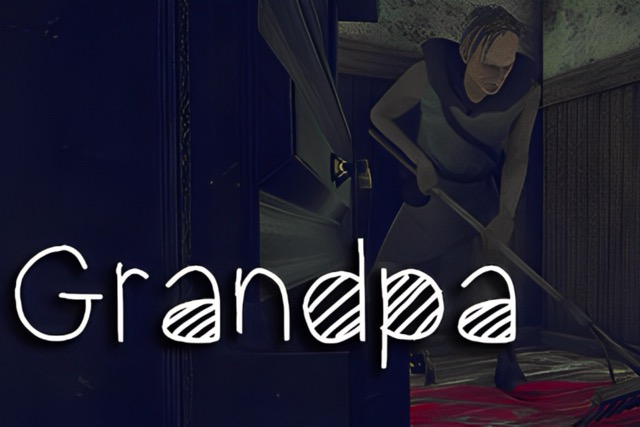



Live Granny4.io

Play for Granny Grandpa or Slendrina

Browser Instant Play Free
advertisement

Game Description

Play for Granny, Grandpa or Slendrina


1. Game Overview

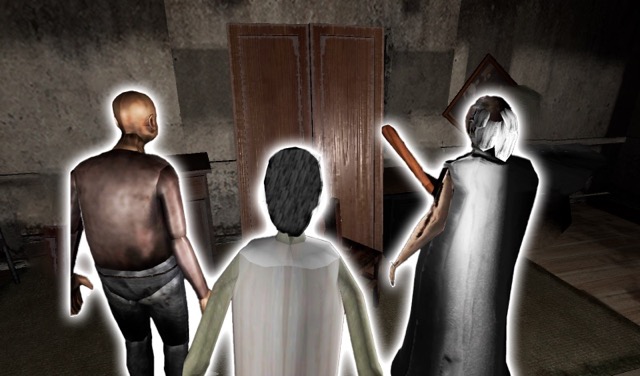
Play for Granny, Grandpa or Slendrina is the catalog's second role-reversal horror game — and where Play for Angry Granny gives you one monster to play, this game gives you three. Before each run begins, you choose your character: Grenny, Grendpa, or Slendrina. Each of these monsters operates differently, and each transforms what would otherwise be the same chase scenario into a distinct experience with its own strengths and approach requirements.

The premise is straightforward and immediately satisfying for anyone who's spent time fleeing from these characters in other games on the site: the victim runs, and you hunt. Your job is to close the distance, land a stun on your target, and keep up the pressure across multiple nights as the captive progressively becomes harder to catch. By the final nights, the guy has weapons. Each shot he lands slows you down for a few seconds — enough for him to open distance and require you to reorient to where he went.

The multi-night escalation is what gives the game its campaign structure. Early nights are direct practice in each monster's movement and attack range. Later nights test whether you've internalized the stun mechanic, the direction-reading required after a weapon shot slows you, and the patrol positioning that cuts off the captive's most likely escape routes before he reaches them. The easiest way to catch someone is to be where they're going rather than where they are.

Three characters, five nights, escalating captive difficulty. The predator's perspective on a franchise that usually makes you the prey.

Key Details:

  • Genre: Reverse Horror / Pursuit Combat
  • Difficulty Level: Easy (Night 1) to Hard (Night 5)
  • Average Play Time: 10–20 minutes per night; 50–90 minutes for a full five-night campaign
  • Best For: Horror fans aged 12+ who want to play from the monster's perspective; players who completed Play for Angry Granny and want more character variety; fans of the Granny, Grandpa, and Slendrina characters

2. How to Play

Getting Started:

  1. Choose your character — Grenny, Grendpa, and Slendrina each move differently and have different attack ranges and behavioral tendencies. On your first session, select the character you're most familiar with from playing against them in other games — the reversed perspective reveals aspects of their behavior you may not have noticed as a victim.
  2. Track the captive by sight and sound — The guy moves fast when he spots you. Stay alert to the direction of movement sounds and any visual sightings to build a directional picture of where he's gone after breaking your line of sight.
  3. Close distance and land a stun — Move toward the captive's position and use Left Mouse Button to attack when you're within range. A successful hit stuns him briefly — use the stun window to close any remaining distance before he recovers.
  4. Track his direction after a weapon shot — In later nights, he carries weapons. Shots that land will slow your monster for a few seconds. During that slow period, identify which direction he ran rather than immediately resuming movement — knowing where he went when you're slowed is what allows you to cut him off when you recover speed.
  5. Anticipate his route rather than chasing directly — The captive runs away from your last sighting. If you know the house's dead ends and favored routes from playing other games on the site, you can position yourself at the destination rather than chasing his trail.

Basic Controls:

ActionInput
Look aroundMouse
MoveWASD or Arrow Keys
Attack (stun)Left Mouse Button
PauseEsc

Objective: Play as one of three selectable monsters — Grenny, Grendpa, or Slendrina — and chase down a captive across five escalating nights. Land successful stun attacks to win each night while managing weapon slowdowns from the captive's increasingly capable self-defense. Complete all five nights to finish the campaign.


3. Game Features & Highlights

  • Three playable monster characters — Grenny, Grendpa, and Slendrina each offer distinct movement and attack characteristics, creating three different approaches to the same pursuit scenario
  • Five-night escalation campaign — The captive becomes progressively more capable across five nights — from an easy early pursuit to a weapon-equipped opponent who slows you with well-placed shots
  • Weapon slowdown mechanic — Shots from the captive's weapons in later nights apply a temporary speed reduction, requiring direction-tracking during the slow period rather than immediate pursuit resumption
  • Complete role reversal — The monsters, settings, and chase dynamics familiar from the victim's perspective are now experienced from the predator's side — revealing the behavioral logic of each character in a new way
  • Direction-reading pursuit system — Catching the captive consistently requires reading and anticipating his movement direction rather than simply chasing his visible trail

4. Tips & Strategies

Beginner Tips:

  • In the first few nights, prioritize learning each character's stun range before worrying about direction prediction. Attack when you think you're within range — the hit or miss tells you exactly where the stun threshold is for your chosen character. This range knowledge is foundational for every subsequent night.
  • The captive runs away from your most recent sighting position. This is predictable: if you were last seen in the eastern section of the house, he's moving west. Use this directional logic to cut to a western position faster than chasing east-to-west through the house.
  • Sound-based tracking applies to you as the monster just as it did when you were the prey. The captive's footsteps carry directional information — follow the sound before the visual when you've lost sightline.

Advanced Strategies:

  • When a weapon shot lands and your speed reduces, stop moving for one to two seconds and identify the sound direction the captive's footsteps are going. Resuming pursuit in the correct direction immediately after the slowdown expires closes more distance than resuming in a guess direction at full speed.
  • Each of the three characters has a different approach style that rewards different positioning. Playing Slendrina, whose behavioral patterns are less movement-centric in other games, will feel different from playing Grenny's more direct pursuit style. Experiment with each character to find which approach suits your natural instincts — then use that character for higher-night attempts.
  • On nights four and five, the captive's weapon use becomes more frequent. Anticipate shots by watching for the captive to turn toward you before firing — there's typically a brief wind-up when he's lining up a shot. Lateral movement during that window reduces the hit probability.

What to Watch Out For:

  • Resuming pursuit immediately in the wrong direction after a slowdown — The weapon slowdown is most dangerous when it causes a direction error. Moving at reduced speed in the wrong direction costs both time and the speed advantage you had before the shot landed. Use the slow period to orient correctly rather than to continue moving at reduced efficiency.
  • Underestimating night one as a warmup — Night one is easier, but it's also your clearest opportunity to understand your chosen character's mechanics without the pressure of a weapon-equipped captive. Players who coast through night one without deliberately learning their character's range and attack timing enter the later nights underprepared.

5. Game Elements Explained

The Three-Character Selection System The character selection in Play for Granny, Grandpa or Slendrina creates three distinct versions of the pursuit scenario by giving each monster a different movement profile and attack range. Grenny's pursuit style is the most familiar from the wider Granny game catalog — her movement and patrol tendencies are documented across dozens of games on the site, and playing as her reveals the logic behind behaviors that victims have been reacting to. Grendpa moves differently — his pace and reach characteristics reflect the heavy, hammer-wielding figure familiar from Granny 2 and related entries. Slendrina is the most behaviorally distinct — her pursuit style reflects a character who doesn't operate on standard patrol-and-react logic in other games. Each character requires its own adaptation period, and the multi-night campaign structure is long enough that players who commit to one character for a full five-night run develop a more complete understanding of that character's strengths than those who switch between nights.

The Five-Night Escalation System The five-night campaign escalates the captive's capability in a way that tracks the player's growing familiarity with their chosen monster. Night one is a clean introduction: the captive runs, your monster chases, the mechanics are learned without complication. Nights two and three introduce more deliberate evasion — the captive uses the environment more effectively and routes himself toward dead-end-avoidance positions. Nights four and five add the weapon system: the captive has ranged capability, shots land and slow your monster, and the pursuit becomes a weapon-exchange as well as a chase. This escalation matches learning pace to difficulty increase — by night four, players who have internalized the stun range, directional tracking, and pursuit positioning have the skills to manage the weapon slowdown. Players who haven't will find the weapon introduction significantly more disruptive than players who've been applying deliberate technique since night one.

The Weapon Slowdown Direction-Reading Mechanic The weapon shots in later nights don't just apply a speed penalty — they interrupt pursuit momentum at the moment when maintaining it matters most. A shot that lands while you're closing distance and about to land a stun reverses the advantage, creating a gap that requires the full remainder of the slowdown period to recover. The correct response to being shot is not to attempt to maintain pursuit at reduced speed — it's to use the slow period as an observation window. The captive, having just shot at you, is now running. Identify the direction of his footsteps during the slowdown, then resume full-speed pursuit in the correct direction when the effect expires. This direction-reading during the slowdown is the tactical skill that separates consistent multi-night hunters from players who find nights four and five significantly harder than the previous three.


6. Frequently Asked Questions

Q: Which character should I choose first? A: Choose Grenny for your first run — she's the character most familiar from playing against her in other games on the site, and playing as her on night one reveals the pursuit and patrol logic you've been reacting to as a victim. Once you understand Grenny's mechanics from both perspectives, try Grendpa or Slendrina for a different chase experience.

Q: How do I deal with weapon shots in later nights? A: When a weapon shot lands and your speed reduces, stop trying to maintain pursuit at reduced efficiency. Instead, listen for the captive's footstep direction during the slow period. Once the slowdown expires, resume full-speed pursuit in the correct direction based on what you heard. Moving in the right direction at full speed after a shot is more effective than moving in any direction at reduced speed during the effect.

Q: What's the difference between Grenny, Grendpa, and Slendrina in this game? A: Each character has distinct movement speed, attack range, and pursuit style. Grenny's direct sound-and-sight pursuit is the most straightforward. Grendpa's heavier movement style reflects a larger effective attack reach at closer range. Slendrina's behavioral pattern is the most distinct — she operates differently from the other two in ways that become apparent during pursuit. Specific movement values are revealed through play rather than described in advance — experimentation across characters is the intended discovery method.

Q: Is there a way to predict where the captive will run? A: Yes — the captive's movement logic is directionally reactive to your last sighting position. He runs away from where you most recently appeared to him. Use this by positioning yourself to create sightings that push him toward dead ends or contained sections of the environment rather than chasing his trail directly. Knowledge of the house layout from other games on the site is directly applicable here.

Q: Is Play for Granny, Grandpa or Slendrina playable on mobile? A: The game runs via HTML5/Unity WebGL in desktop web browsers. The control scheme — WASD, mouse, Left Mouse Button attack — is designed for keyboard-and-mouse play. Desktop play on Chrome, Firefox, Safari, or Edge provides the optimal experience. Mobile play is not recommended given the precision movement and attack timing requirements of the pursuit mechanic.

7. Related Games You Might Enjoy

If you like Play for Granny Grandpa or Slendrina, you might also enjoy: