






Game Description
Horror Escape: Granny Room
1. Game Overview
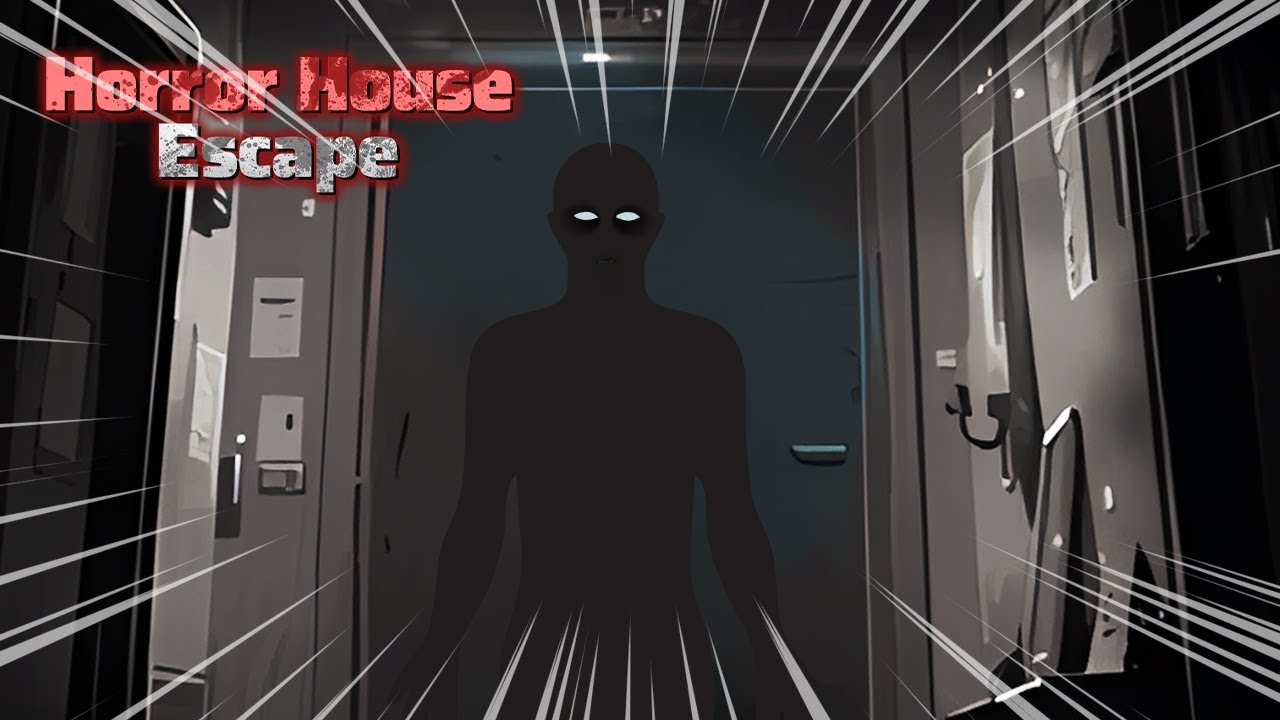
Horror Escape: Granny Room is a stealth escape game built around a multilayered door system that requires more than a single key to open the exit. Physical locks, combination dials, and coded sequences all stand between you and the way out — and the codes and keys needed to solve each one are scattered through a house that Granny patrols in response to every sound you make. Every creak from an unwatched floorboard, every object knocked from a shelf, every time something crashes — she comes to investigate.
The game's combination of layered puzzle mechanics and active stealth creates a specific kind of pressure that single-key Granny games don't produce. In single-key games, finding the key is the objective and avoiding Granny is the constraint. In Horror Escape: Granny Room, the exit is a sequence of solutions — item-to-lock matching, code recognition, timed movements — and Granny is the force that interrupts you mid-sequence, often just as you're turning a dial or reading the number off the back of a painting. The multilayered door system means that partial progress (two locks solved, one remaining) feels closer to success and further from failure than a standard single-item escape — and that tension at partial completion is genuinely effective.
Adjustable difficulty modes change how often Granny appears and how aggressively she patrols — the harder settings push her appearance frequency to levels where hiding time becomes as strategically important as search time. Available on both browser and Android/iOS, the cross-platform support means the game adapts to whichever device you're playing on.
Key Details:
- Genre: Survival Horror / Escape Puzzle
- Difficulty Level: Variable — adjustable from standard to hard
- Average Play Time: 20–40 minutes per session
- Best For: Horror escape fans aged 12+; players who enjoy layered lock puzzles over single-key escape structures; cross-platform players wanting a full escape experience on mobile
2. How to Play
Getting Started:
- Survey each room for environmental codes and items before touching anything — Codes written on the backs of paintings, keys under mattresses, and tools left in furniture drawers are all present before Granny's patrol reaches your area. A fast survey before searching reduces the time spent with your back to the door.
- Crouch (G) as your default movement mode — Loud footsteps trigger Granny's patrol redirect. Walking at full height generates more sound than crouching — establish crouch as your default and switch to running (not listed but implied by timing mechanics) only in confirmed emergencies.
- Note which lock each found item corresponds to — The multilayered door system uses several distinct lock types. When you find an item or code, assess which door component it's likely for before backtracking to apply it — unnecessary back-and-forth through patrolled corridors costs more time than a moment of assessment at the find location.
- Prioritize the hiding spot nearest to each active puzzle location — Wardrobes, under-bed positions, and crates are all valid cover options. Before beginning any multi-step puzzle interaction, identify which hiding spot is closest. If Granny's footsteps accelerate mid-puzzle, you need to reach cover without searching for it.
- Use the throw mechanic (R) to create directional distractions — A thrown object creates noise in a specific direction, redirecting Granny's patrol toward the sound source. Use this when you need to move through a section she's currently occupying.
Basic Controls:
| Action | Input |
|---|---|
| Look around / navigate | Mouse |
| Move | WASD |
| Interact | E or F |
| Throw object | R |
| Crouch | G |
| Shoot | Q |
| Select subject | 1–4 number keys |
Objective: Escape the house by solving its multilayered door system — finding physical keys, reading environmental codes, and correctly matching items to their corresponding locks — while avoiding Granny's noise-reactive patrol. Use crouch movement, hiding spots, and thrown object distractions to manage encounters across adjustable difficulty modes.
3. Game Features & Highlights
- ✓ Multilayered door system — Physical locks, combination dials, and coded sequences create a layered exit puzzle that requires multiple item and code discoveries rather than a single key
- ✓ Environmental code discovery — Codes hidden on the backs of paintings, keys under mattresses, and tools inside furniture reward thorough environmental scanning rather than obvious-location searching
- ✓ Adjustable difficulty modes — From standard stealth pacing to aggressive high-difficulty modes where Granny appears frequently and hiding opportunities are compressed
- ✓ Multiple hiding types — Wardrobes, under-bed positions, and crates each offer distinct cover options with different access speeds and concealment security levels
- ✓ Throw-based distraction mechanic — The R key throw creates targeted noise distractions that redirect Granny's patrol, enabling deliberate movement through occupied sections
4. Tips & Strategies
Beginner Tips:
- The backs of paintings are a consistently productive code location — check them by interacting with wall art items rather than scanning paintings at face value. Codes on the reverse side require the interact action to reveal, not just looking at the painting's front.
- Objects crashing off shelves — including accidental bumps — are the loudest single noise event in the game. Move slowly through rooms with unstable or edge-positioned objects, especially in sections where Granny's audio cues place her in adjacent corridors.
- On the tougher difficulty modes, Granny's increased appearance frequency means hiding time competes directly with puzzle time. Budget mental time for hiding — on hard modes, the hiding-to-searching ratio shifts significantly compared to standard, and runs that don't account for it end with puzzle sequences interrupted repeatedly near completion.
Advanced Strategies:
- Work through the door's lock sequence in order rather than collecting all items first and solving all locks after. Solving each lock as its item is found reduces the number of return trips through patrolled corridors and clears one puzzle component from mental tracking at a time.
- Use subject selection (1–4 keys) to maintain inventory clarity during multi-item puzzle sequences. Knowing which item is in which slot before you reach the door prevents the time-wasting of opening inventory to identify items at the lock when Granny may be nearby.
- On hard modes, the throw distraction (R) becomes a near-essential tool rather than an optional one. Identify three or four reliable throw-destination locations in the house early in each run — positions far from your primary search zones where a thrown object will reliably redirect Granny away from your current area.
What to Watch Out For:
- Starting a hiding action mid-puzzle when Granny enters — If you hear Granny's footsteps while actively solving a combination dial or lock mechanism, the puzzle interaction must be abandoned before the hide is initiated. Attempting to finish one more input before hiding almost always results in being caught. Abandon the puzzle, find cover, resume after she moves on.
- Missing codes on painting backs because they look decorative — Environmental codes are embedded in objects that appear purely atmospheric — paintings that look like wallpaper decoration contain numeric codes on their reverse sides. Interact with every wall-mounted object rather than treating them as background detail.
5. Game Elements Explained
The Multilayered Door System Horror Escape: Granny Room's exit is not protected by a single lock — it's protected by a sequence of distinct lock types that each require a specific solution before the next layer can be addressed. Physical key locks require traditional key items found through environmental searching. Combination dial locks require numeric codes discovered on environmental surfaces (painting backs, notes, objects with markings). Item-matching locks require specific tools paired to their corresponding mechanisms. This layered structure creates a puzzle experience with progressive unlocking — each solved layer represents real progress toward the exit and reveals the next challenge. The multilayered design also creates specific vulnerability windows: solving each lock requires a stationary interaction period that Granny can interrupt. Planning which lock to solve during which window of her patrol, and which hiding spot to use if interrupted mid-solution, is the strategic depth the layered system adds above single-item escape games.
The Environmental Code Discovery System The codes and items needed for Horror Escape: Granny Room's door sequence are embedded in the house's physical environment rather than placed in obviously interactive objects. A code might be on the back of a painting that appears purely decorative, under a mattress at floor level that standard eye-level scanning misses, or inside a piece of furniture that appears closed. This environmental embedding creates a search challenge where the player's scanning behavior — specifically whether they interact with objects rather than just looking at them — determines how quickly codes and items are located. Players who develop the habit of interacting with all wall-mounted objects, checking all floor-level positions, and opening all furniture surfaces find items faster than those who scan rooms at standing-height eye level without interacting with individual elements.
The Adjustable Difficulty System Horror Escape: Granny Room's difficulty adjustment affects more than Granny's speed — it changes the fundamental time ratio between searching and hiding that shapes each run's pacing. On standard difficulty, Granny's patrol allows extended searching periods between appearances, making the puzzle sequence the primary time investment. On higher difficulties, her increased appearance frequency compresses the available searching windows and forces more frequent hiding sequences — shifting the run's primary time allocation toward cover management rather than puzzle solving. This isn't simply harder in the conventional sense; it's a different experience of the same house, where the hiding mechanics become as strategically important as the puzzle mechanics. Players who approach hard modes with standard-difficulty habits (treating hiding as reactive to encounters rather than planning for frequent covers proactively) find the difficulty jump larger than expected.
6. Frequently Asked Questions
Q: How many locks does the door have, and what types are they? A: The door's multilayered protection includes physical key locks, combination dial locks, and item-to-mechanism locks. The exact count of each type depends on the run, but all types must be solved before the exit is accessible. Approach the door early to understand which lock types are present, then match your item and code discoveries to each type during exploration.
Q: What should I do if Granny appears while I'm solving a combination dial? A: Stop the puzzle interaction immediately and move to your nearest pre-identified hiding spot. Don't attempt to finish entering the final numbers — Granny's arrival speed is fast enough that completing one more input before hiding consistently results in being caught. Abandon the partial combination, hide, and re-enter the full sequence after she moves on. Partial combination inputs typically don't save between interruptions.
Q: Is Horror Escape: Granny Room available on mobile? A: Yes — Horror Escape: Granny Room is available on both web browser (PC) and Android/iOS mobile devices. The mouse-based navigation and touch-compatible interaction system adapt to mobile input. Note that the full control scheme (WASD, multiple interaction keys) may be more comfortable on desktop; mobile play is supported but keyboard controls are best experienced on desktop.
Q: How do I find codes hidden on painting backs? A: Approach wall-mounted paintings and artworks and interact with them using E or F. The game's environmental code system places numeric combinations on the reverse sides of objects that appear decorative from the front. The interact action reveals the code; simply looking at the painting's visible front surface does not. Make interacting with all wall objects a standard part of your room-search routine.
Q: What's the difference between the difficulty modes? A: Higher difficulty modes increase how frequently Granny appears and how aggressively she patrols — on the toughest settings, she shows up much more often and leaves minimal time between appearances for uninterrupted searching. Hiding becomes a primary time allocation rather than an occasional interruption. Start on standard difficulty to learn the house layout and lock sequence before attempting higher modes.
7. Related Games You Might Enjoy
If you like Horror Escape Granny Room, you might also enjoy:
- Granny 2 Original - It offers another browser horror run with related survival, puzzle, or escape pressure.
- Grandpa and Granny Home Escape - It expands the home escape formula with both Granny and Grandpa-style pressure.
- Granny vs the Baby in Yellow - It offers another browser horror run with related survival, puzzle, or escape pressure.
Comments (0)
Add a Comment