



Game Description
Granny's Labyrinth
1. Game Overview
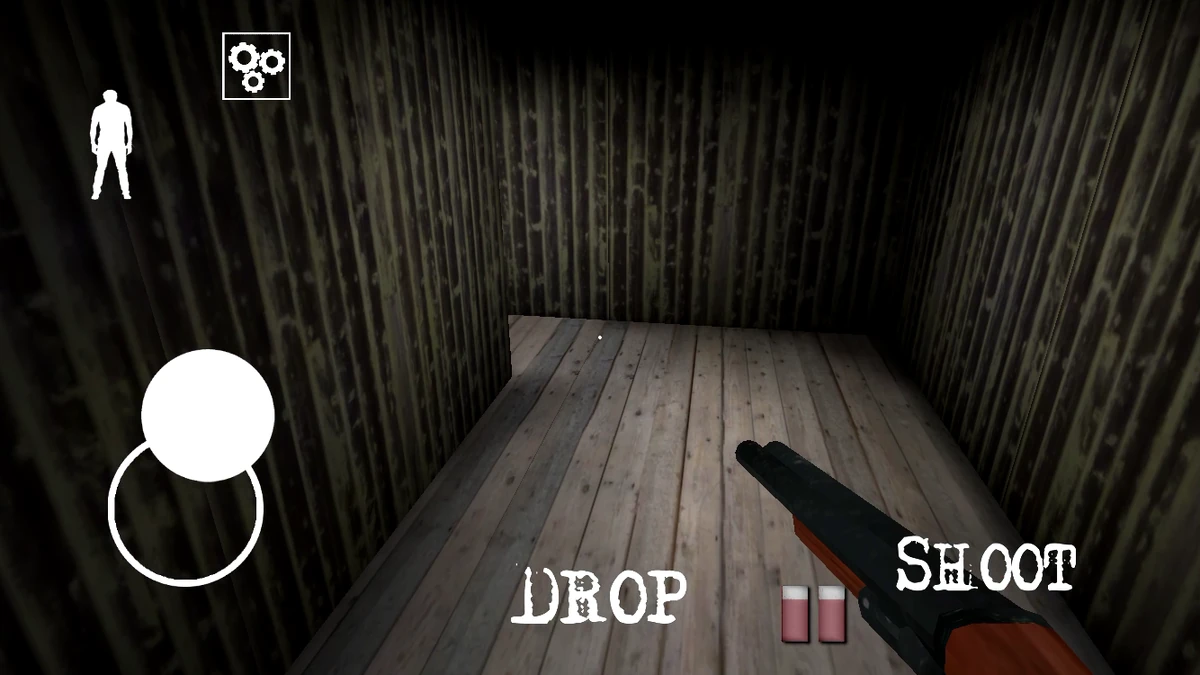
Granny's Labyrinth replaces the house, school, and hospital settings of the Granny series with the most primal horror environment of all: a maze you can't see the end of. High cold hedges close in on every path. The ground creaks under your shoes when you hesitate. Dead ends are marked by debris and remains rather than dead-end signs. And somewhere in the labyrinth's interior — starting slow, then cutting off routes if you stall or double back — Granny moves through the same narrow passages you're trying to navigate.
The outdoor hedge maze creates a specific kind of disorientation that enclosed-building games don't produce. Buildings have walls you can map. Maze hedges look identical on every turning, and the sameness is cumulative — after a few turns, you're genuinely uncertain whether you've been in this section before. The game leans into this by triggering jump scares from environmental sounds and movement rather than purely from Granny's visual appearance: a tin can clattering somewhere ahead, a wheelchair creaking from behind a kennel, a shadow moving where the path widens near the shed. These sounds may or may not indicate Granny's presence, and that ambiguity is itself a horror mechanic.
The exit is somewhere deep in the labyrinth — past a fallen gate, near a set of tools left on the ground — and reaching it requires navigating a maze whose routes are complicated by Granny's movement, loose objects that clatter when touched, and the basic challenge of maintaining orientation in a visually uniform environment where dead ends come with remains as the only distinguishing feature.
Key Details:
- Genre: Survival Horror / Maze Exploration
- Difficulty Level: Medium
- Average Play Time: 15–30 minutes per run
- Best For: Horror fans aged 12+; players who enjoy maze navigation under threat; fans of claustrophobic outdoor horror settings distinct from standard indoor Granny games
2. How to Play
Getting Started:
- Establish directional discipline immediately — The hedge maze looks identical at every turn. Decide on a consistent turning strategy before you start (always try left first, or always hug one hedge wall) and apply it throughout. Consistent turning rules create a searchable pattern rather than random wandering.
- Move at default walking pace — avoid hesitating — The original copy notes that the boards creak when you hesitate. Keep moving at a consistent pace rather than stopping to look around — stillness creates both audio risk and forward progress loss.
- Listen for environmental audio cues before moving toward them — Wheelchair creaks from behind kennels, tin cans clattering, and shadows near path-widenings all potentially indicate Granny. Hear the sound first, then assess its direction before advancing. Don't move toward unexplained sounds.
- Avoid touching loose objects in the path — Tin cans, loose rocks, and scattered items in the maze passages generate noise when contacted. Navigate around them rather than through them, particularly when Granny's audio position is uncertain.
- Look for the fallen gate and ground-level tools near the exit — The exit is marked by specific environmental details: a fallen gate and tools left nearby. Keep these visual markers in mind as you navigate — they distinguish the exit area from standard dead ends and path continuations.
Basic Controls:
| Action | Input |
|---|---|
| Look around | Mouse |
| Move | WASD or Arrow Keys |
| Continue (interact) | E |
| Run | Shift |
| Restart | Space |
| Toggle music | Tab |
Objective: Navigate the hedge maze to its exit — marked by a fallen gate and scattered tools — while avoiding Granny's patrol through the same passages. Maintain directional orientation in a visually uniform environment, avoid loose objects that generate alerting noise, and reach the deep interior exit before Granny cuts off your path through route-blocking behavior.
3. Game Features & Highlights
- ✓ Claustrophobic outdoor hedge maze — High hedges that close in on every path create a visually uniform, disorienting navigation challenge unlike any indoor Granny game environment on the site
- ✓ Sound-triggered jump scares — Environmental audio events — tin cans, wheelchair creaks, shadow movements — trigger jump scares from the maze's physical detail rather than from Granny's direct appearances, creating sustained ambient tension
- ✓ Route-blocking Granny behavior — Granny doesn't just patrol — she cuts off routes when you stall or double back, actively reducing your available path options rather than simply moving through the maze independently
- ✓ Noise-reactive loose object system — Tin cans, rocks, and scattered items throughout the maze generate alerting noise when contacted, creating hazards the player must navigate around rather than through
- ✓ Visual dead-end markers — Debris and remains at dead ends distinguish them from path continuations — rewarding observant players who read environmental details and reducing aimless backtracking
4. Tips & Strategies
Beginner Tips:
- Choose a wall-following strategy and commit to it. In maze navigation, consistently following one wall (always keeping the left hedge within touching distance, or always keeping the right) creates a systematic search pattern that eventually covers the entire reachable maze rather than circling sections you've already visited. It's slower than inspired navigation but far more reliable than turning randomly.
- The fallen gate and ground-level tools are your only reliable exit markers. When you see a gate that's fallen horizontally across a path section and tools scattered near it, you've found the exit area — interact (E) to continue out. Don't mistake gate-shaped debris elsewhere in the maze for the exit; the specific combination of fallen gate plus tools is the distinguishing feature.
- Run (Shift) only when Granny is audibly close and your path forward is confirmed clear. Running in the maze generates noise that the normal walking pace doesn't — and running into a dead end while she's behind you is significantly worse than walking into one where you have time to turn around.
Advanced Strategies:
- The route-blocking behavior means that doubling back is progressively more dangerous as a run advances. Granny's position in the maze adjusts to cut off paths you've recently used — returning through sections you just came from puts you on a route she's more likely to be occupying. When you reach a dead end, take an alternate route rather than the path you came from whenever a viable option exists.
- Sound-triggered jump scares from environmental objects serve a dual purpose: they startle, but the direction of the sound also carries positional information. A tin can clattering ahead of you in the maze indicates there's something (or someone) in that passage. A wheelchair creak behind a kennel indicates that kennel section is worth approaching cautiously. Treating the audio events as threat-position intelligence rather than pure startle events gives you usable navigation information from each one.
- The maze's dead ends marked by debris and remains function as navigation data. When you reach a debris-marked dead end, record that path segment as exhausted and avoid it on your return unless you have specific reason to re-check it. Building a mental model of confirmed dead ends reduces the possibility space for remaining paths toward the exit.
What to Watch Out For:
- Stopping in the maze to look around — Hesitation generates creaking sound from the boards underfoot. In a maze where noise management matters, stopping to orient yourself costs you both audio stealth and forward momentum. Keep moving while processing navigation decisions rather than stopping to think.
- Moving toward jump-scare audio sources — The environmental sounds in Granny's Labyrinth are frequently positioned to draw you toward dangerous sections. A tin can clattering ahead is not an invitation to investigate — it's a warning. Move cautiously toward audio events from which you haven't yet established safety, not quickly.
5. Game Elements Explained
The Hedge Maze Navigation Challenge Granny's Labyrinth's hedge maze is the game's central design achievement and the feature that most clearly differentiates it from every other entry in the Granny genre. Enclosed building games — houses, schools, asylums — have walls that create recognizable room shapes, doorways that establish clear entry and exit points, and furniture that provides visual landmarks for orientation. The hedge maze eliminates all of these. Every path is bounded by the same tall gray-green hedges. Every turning looks like every other turning. The ground is uniformly dirt and old boards. The visual information available at any moment in the maze is nearly identical to the visual information at every other moment — and this sameness accumulates into genuine disorientation. Players who try to navigate by intuition and visual recognition alone will circle sections repeatedly without recognizing they've returned. Players who apply consistent methodological navigation (wall-following, turning rules, dead-end marking) create reliable orientation in an environment specifically designed to prevent it.
The Route-Blocking Patrol System Granny's behavior in the labyrinth is more sophisticated than standard Granny-formula patrol. She doesn't simply move through the maze on a fixed route that players can learn and avoid — she actively adjusts her position to cut off paths when players stall or double back. This route-blocking behavior means that the maze's available path options shrink over time as Granny's positioning becomes more strategic. Routes you used early in a run are less reliable as the run advances because Granny may have moved to occupy those sections in response to your doubling back through them. The practical implication is that forward progress is always preferable to doubling back, and taking alternate routes when available — even less obviously correct ones — is better than returning through sections Granny has had time to intercept. The route-blocking mechanic converts the maze from a spatial puzzle into a time-pressured spatial puzzle where the correct solution becomes less accessible with each minute spent.
The Environmental Sound and Jump Scare System Granny's Labyrinth generates its horror atmosphere through environmental sound events rather than exclusively through Granny's visual appearances. The maze contains loose objects (tin cans, rocks) that create noise when contacted, and specific maze sections contain ambient audio cues (wheelchair creaks from behind kennels, shadow movements near path-widenings) that trigger jump scare moments. These sounds serve two functions simultaneously. As horror mechanics, they create the sustained ambient tension of not knowing what caused the sound or whether it indicates Granny's presence. As navigation mechanics, they carry directional information — sounds from specific sections tell you which passages contain environmental hazards or possibly Granny herself. Players who treat sound events purely as startle mechanics miss the positional information they contain. Players who treat them as positional data while managing the startle response develop a more complete picture of the maze's current threat layout than those depending solely on visual detection of Granny.
6. Frequently Asked Questions
Q: How do I find the exit in the maze? A: The exit is in the maze's deep interior — not reachable through the initial sections nearest your starting point. Navigate consistently deeper into the maze rather than working through the outer sections. When you reach the exit area, it's marked by a fallen gate lying horizontally across the path and tools scattered on the ground nearby. These visual markers distinguish the exit from standard dead ends and debris patches. Interact (E) when you reach this area to complete the run.
Q: What should I do when Granny cuts off a route I was using? A: Don't attempt to pass through her position — take an alternate route. When Granny's route-blocking behavior has occupied a previously available path, look for branching passages you haven't explored yet. If all visible branches seem occupied or uncertain, move to an unexplored section of the maze rather than attempting to navigate through or wait out her position on a known path.
Q: How do I tell a dead end from a path that continues? A: The game marks dead ends with debris and remains — scattered objects, visual clutter that indicates the path terminates here. Paths that continue don't have this type of terminal marking. When you reach a section that ends in debris, it's a confirmed dead end — turn back and take a different route rather than exploring further into what looks like a closed section.
Q: What does the Space key (Restart) do during a run? A: Space resets the current run from the beginning. Use it when your position in the maze is unrecoverable — completely lost with Granny blocking all available forward routes — rather than as a default response to difficult moments. Each restart provides a fresh maze to navigate and the opportunity to apply what you learned about the maze's layout in the previous run. If you're consistently losing track of your position, apply a wall-following strategy on the next restart to maintain orientation.
Q: Is Granny's Labyrinth playable on mobile? A: Granny's Labyrinth runs via HTML5/Unity WebGL in desktop web browsers. The keyboard-and-mouse control scheme — WASD, mouse, E, Shift, Space, Tab — is designed for desktop or laptop play. Desktop play on Chrome, Firefox, Safari, or Edge provides the optimal experience. Mobile play is not recommended given the control layout and the navigational precision the maze requires.
7. Related Games You Might Enjoy
If you like Granny's Labirynth, you might also enjoy:
- the Backrooms - It offers another browser horror run with related survival, puzzle, or escape pressure.
- Exit 8 - It offers another browser horror run with related survival, puzzle, or escape pressure.
- I'm on Observation Duty - It offers another browser horror run with related survival, puzzle, or escape pressure.
Comments (0)
Add a Comment